Swords / Maple Lake Station
A flag stop that became a lumber settlement, postal point, hotel stop and small community — with several pieces of the story still visible on the ground.
Swords began as Maple Lake Station, a small railway point whose fortunes rose with lumbering, tourism and J.R. Booth's line. The general store, post office, hotel, school and a scattering of houses turned a flag stop into a recognizable community. More than a century later, enough survives — in buildings, photographs, paper ephemera and the railway grade itself — to tell a surprisingly complete story.
The railway creates Maple Lake Station
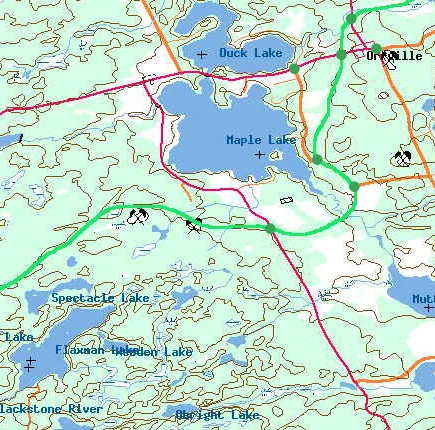
Before the railway, settlement in this part of Christie Township was scattered along the Nipissing Road and local farm clearings. The arrival of the Ottawa, Arnprior & Parry Sound Railway in the 1890s concentrated activity around the track. The stop was called Maple Lake Station after nearby Maple Lake.
Lumbering was the first major economic engine. Sources differ on the precise corporate name associated with the earliest mill operations — the surviving accounts refer to Ludgate or Long Lake lumber interests — but agree that a lumber company acquired timber land, built worker housing and established a company store around 1894. The distinction is flagged here for future primary-source research rather than silently choosing one version.
The general store and post office
The general store stood immediately south of the railway and became the social centre of the settlement. A detailed local-history account says Thomas Sword purchased the store around 1900. It sold staples such as feed, flour, hardware and groceries, and the post office operated from the same building. Residents gathered there on evenings tied to the train schedule — an example of how railway time shaped everyday life.
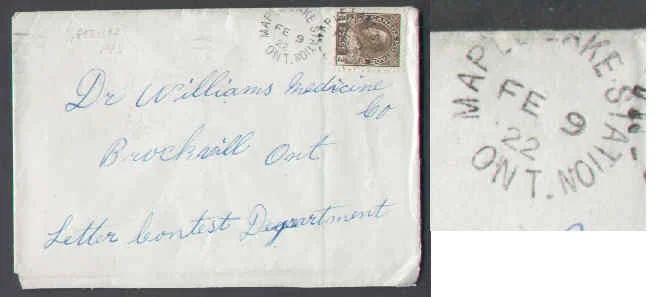
After Thomas Sword's death, Eliza “Lyde” Sword continued the business with help from her brother Walter Cornish. Later operators kept the store and post office going after the railway community had already begun to contract. The original SeguinTrail.ca account remembered the store remaining in operation until the mid-1960s.
The Maple Lake Hotel and tourism
The Sword family also operated the Maple Lake Hotel. The hotel catered to lumbermen, travellers and tourists drawn north by the era's romantic idea of the Canadian wilderness. A surviving flyer in the SeguinTrail.ca archive advertised an “Attractive New Route” to the Muskoka Lakes and Georgian Bay via Maple Lake, combining railway travel, tourist/royal-mail coach service and a hotel/livery stable at Maple Lake.
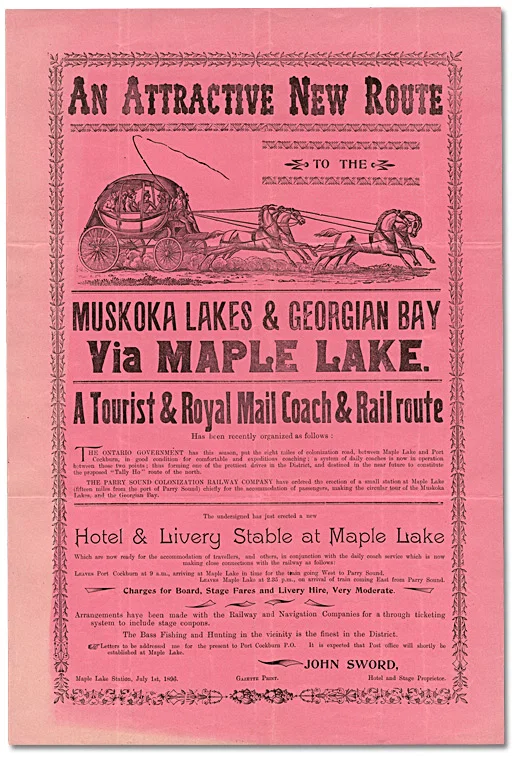
That document helps explain why a small place could support a hotel: the railway made it part of a larger tourism system. American and southern Ontario visitors could travel by train, transfer to coaches and reach lakes and resorts that had previously been difficult to access.
School and community life
A one-room school was built in 1904. Local-history research says the school closed in 1936 because of low attendance, reopened in 1941, and finally closed in 1958. It was subsequently cared for by the Maple Lake Club and has been used as a community building. The persistence of the schoolhouse is important: most railway infrastructure disappeared, but a community building survived because people continued to use it.
Why Maple Lake Station became Swords
In 1925 the station and community were renamed Swords, avoiding confusion with another Maple Lake name and recognizing the family that had become closely identified with local businesses. The rename occurred as the industries that had supported the settlement were already weakening. Lumbering declined, tourist patterns changed, road travel became more important and railway service diminished.
The original site records the station closing in 1946, rails being lifted in 1952 and the store continuing until 1967. Other secondary histories put the store/post-office closure in the mid-1960s. Rather than force false precision, this site records that the final commercial activity ended in that period and will refine the date if primary records are found.
What remains
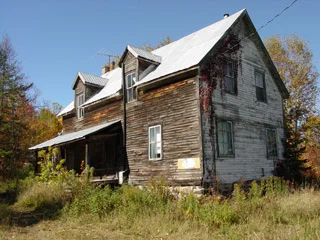
The former store, schoolhouse and traces of early houses have all been reported as surviving elements of the community. The old railway grade runs right through the heart of the settlement, making Swords one of the clearest places to see how a railway stop and a tiny northern Ontario community were physically connected.
What contemporary records add
Bradstreet's 1908 directory described Maple Lake Station as a community of about 50 people on the Ottawa, Arnprior & Parry Sound Railway. A later historical study based on that directory records the Long Lake Lumber Company, a mill, worker housing, a store, hotel and post office around the railway stop.
The federal Canada Official Postal Guide confirms that the post-office name Maple Lake Station, Parry Sound District, was changed to Swords in 1925. Postal accounts also show a Maple Lake Station–Turtle Lake mail route in 1914–15.
Sources & further research
The story above is kept on this site; these links are provided for provenance and for readers who want to go deeper.
- Original SeguinTrail.ca Swords page, local photographs, postal artifact and tourist flyer — all preserved locally.
- Destination Northern Ontario — ghost-town overview (useful for surviving landmarks).
- Maple Lake 365 — Swords General Store and associated Swords research.
- GhostTownPix — Swords history (secondary local-history source).