What the surviving records tell us about grain, freight, passenger service and the scale of the Canada Atlantic Railway.
Most histories of the OA&PS understandably focus on J.R. Booth and the drama of building a railway across the Canadian Shield. The surviving government records add another dimension: they show a working transportation system moving grain, lumber, package freight, passengers and lake-steamer cargo on a scale that is difficult to imagine when walking the quiet trail today.
Government record
Millions of bushels through Depot Harbour
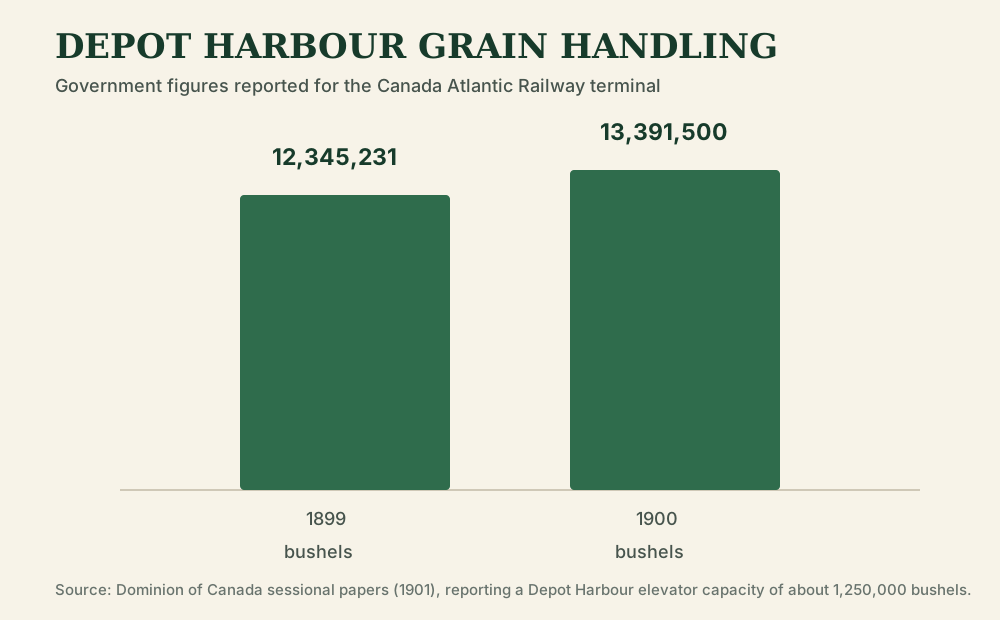
A 1901 Dominion sessional paper reported 12,345,231 bushels handled at Depot Harbour in 1899 and 13,391,500 in 1900. The same record described the terminal elevator as having a capacity of about 1.25 million bushels.
Parliamentary record
A much larger system than a local branch line
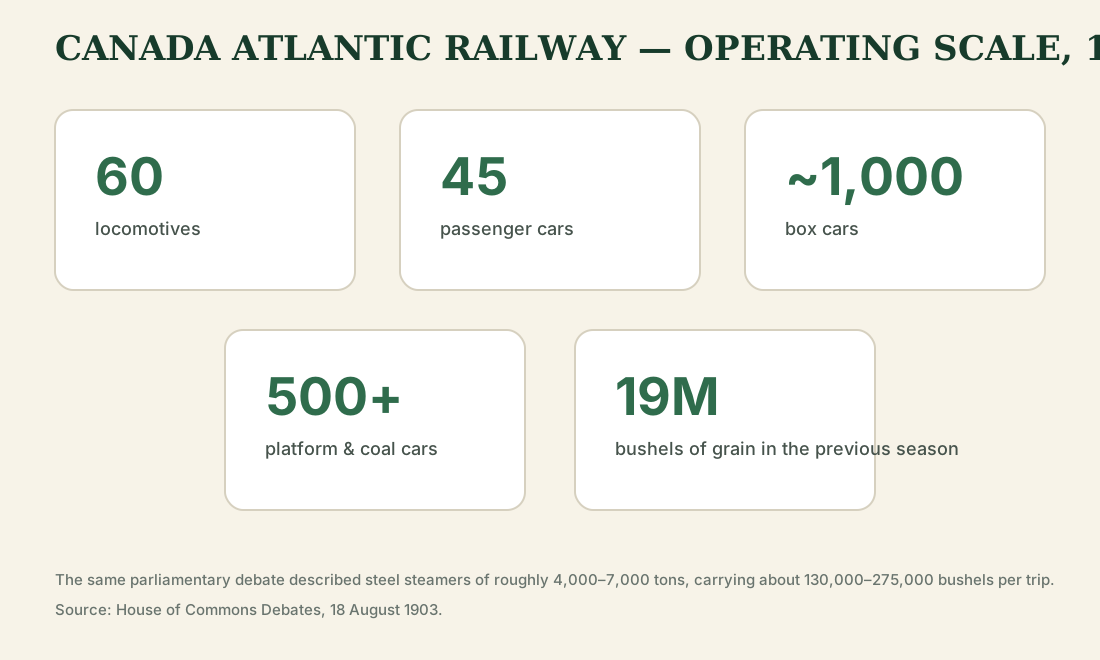
In a 1903 House of Commons debate, the Canada Atlantic was described as operating sixty locomotives, forty-five passenger cars, about a thousand box cars and more than five hundred platform and coal cars. Its Great Lakes steamers linked the railway directly to western grain ports.
Depot Harbour was built for transfer traffic
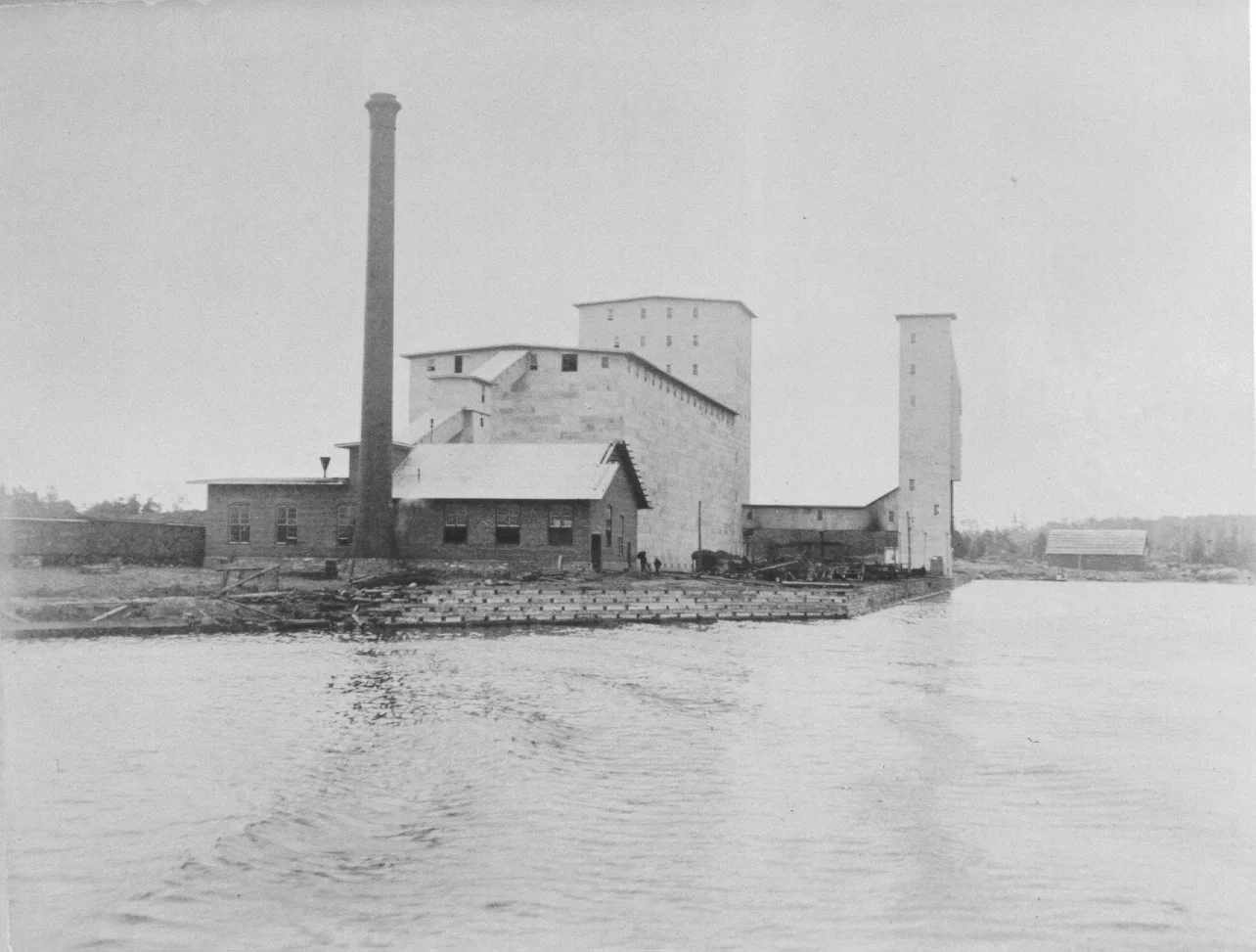
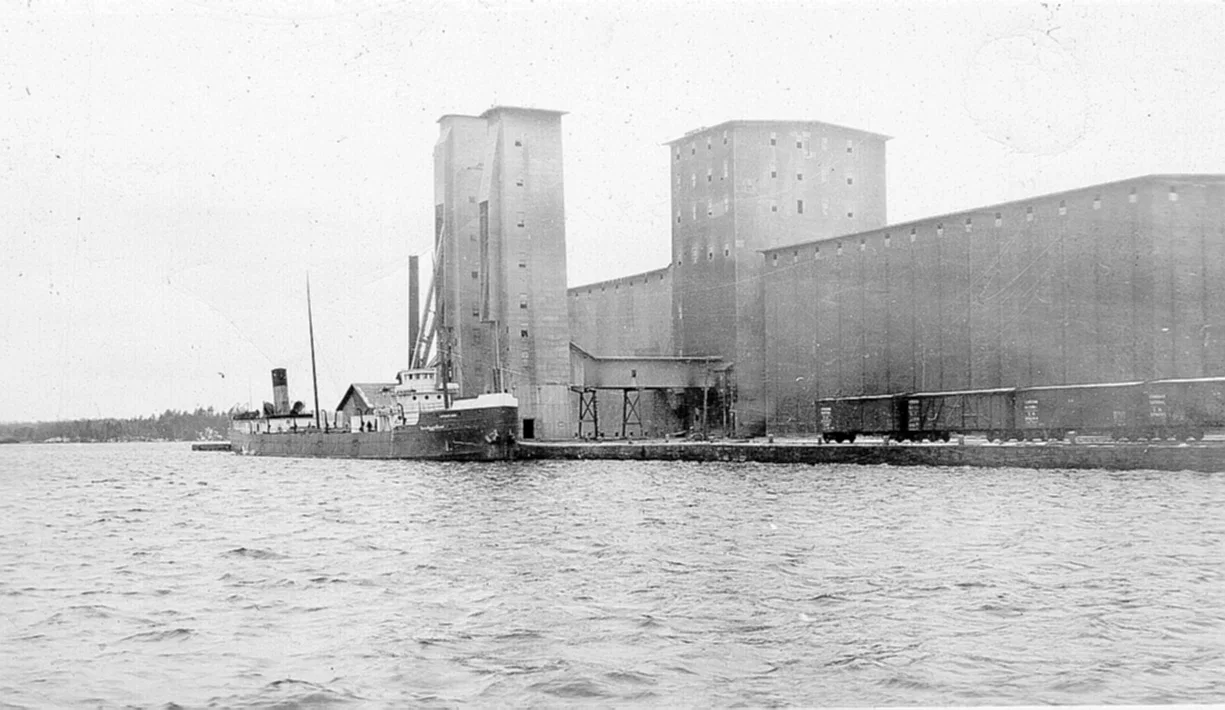
Historic elevator view preserved in the original SeguinTrail.ca archive. Exact source credit was not carried with the old website files and remains under investigation.A second preserved view of the grain-handling complex. Keeping the image local ensures the old site record is not lost while its provenance is researched.
The railway and harbour were designed as one machine. Lake steamers brought grain and other cargo to Georgian Bay; the terminal transferred that traffic to rail for the trip east. Parliamentary discussion in 1903 described steel steamers of roughly 4,000 to 7,000 tons carrying about 130,000 to 275,000 bushels of grain per trip. The same debate said roughly 19 million bushels had moved in the previous season.
Why these figures matter: the abandoned right-of-way can look surprisingly modest today. The traffic figures remind us that this was not a lightly used recreational precursor. At its peak it was part of a continental freight route connecting the upper Great Lakes with Ottawa, Montreal and New England.
Passenger service: a long day across Ontario
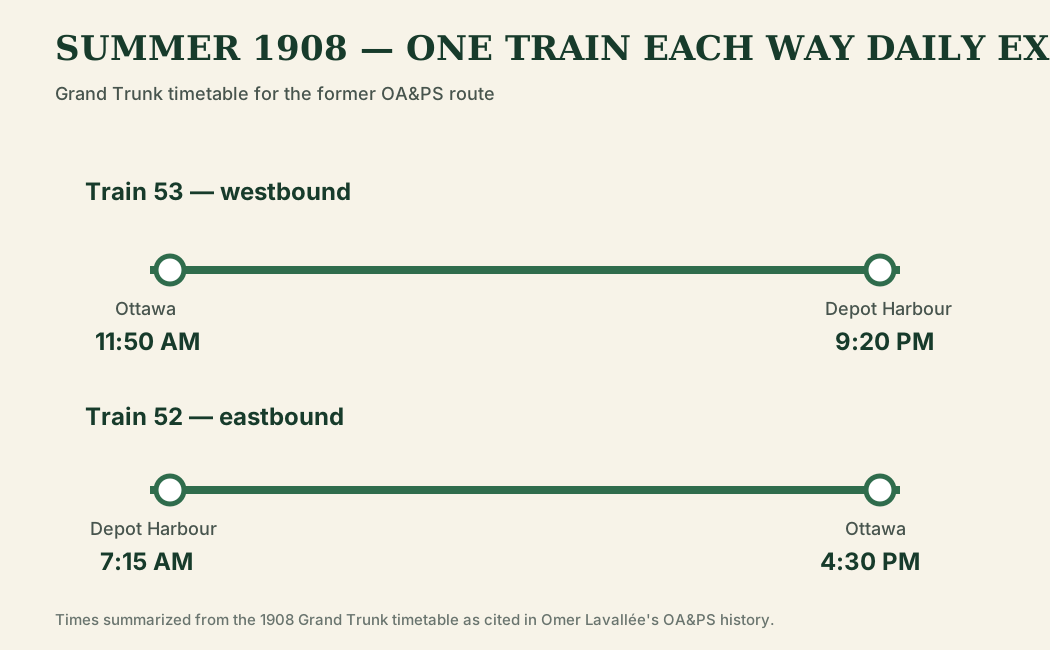
A local reconstruction of the published 1908 schedule. It summarizes the end-point times rather than reproducing the copyrighted timetable artwork.
The 1908 Grand Trunk summer timetable, preserved in later railway research, shows one train each way daily except Sunday. Westbound train 53 left Ottawa at 11:50 a.m. and reached Depot Harbour at 9:20 p.m.; eastbound train 52 left Depot Harbour at 7:15 a.m. and reached Ottawa at 4:30 p.m. The schedule makes the railway's geography tangible: this was an all-day journey, not a commuter trip.
Freight was already busy before the line was finished
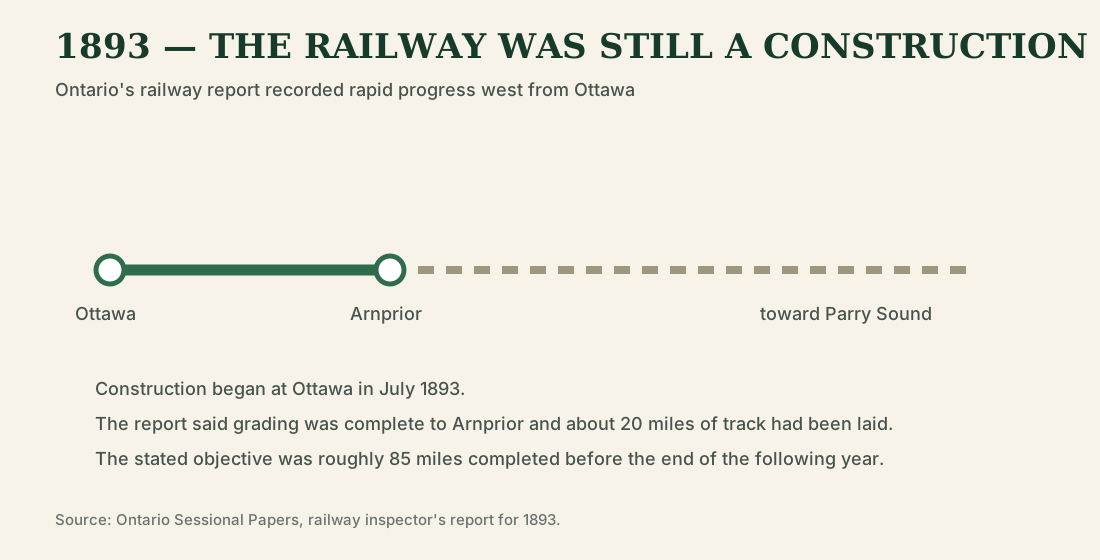
Local construction-progress diagram based on the 1893 Ontario railway report.
The provincial railway inspector's report for 1893 described construction beginning at Ottawa in July, grading completed toward Arnprior and about twenty miles of track laid. Contemporary reporting quoted in later histories also described active freight movements over the new sections even while the railway was still being extended west.
What moved over the line?
Traffic
Why it mattered
Grain
Lake steamers unloaded at Depot Harbour for rail movement east; this became one of the terminal's defining traffic flows.
Lumber
Booth's timber empire was the original economic foundation of the railway and generated both raw and processed forest traffic.
General merchandise
Contemporary accounts mention merchandise, package freight and refrigerated shipments moving over the route.
Passengers
The railway served rural communities, tourists, workers and connections with other lines.
Coal and platform loads
The large number of platform and coal cars recorded in 1903 reflects the railway's heavy freight role.
The statistics and schedules above are presented locally as factual transcriptions/reconstructions. External links are retained so researchers can inspect the underlying records.