Depot Harbour
A railway terminus, Great Lakes port and company town whose rise and disappearance are inseparable from the history of the OA&PS — and from Wasauksing First Nation.
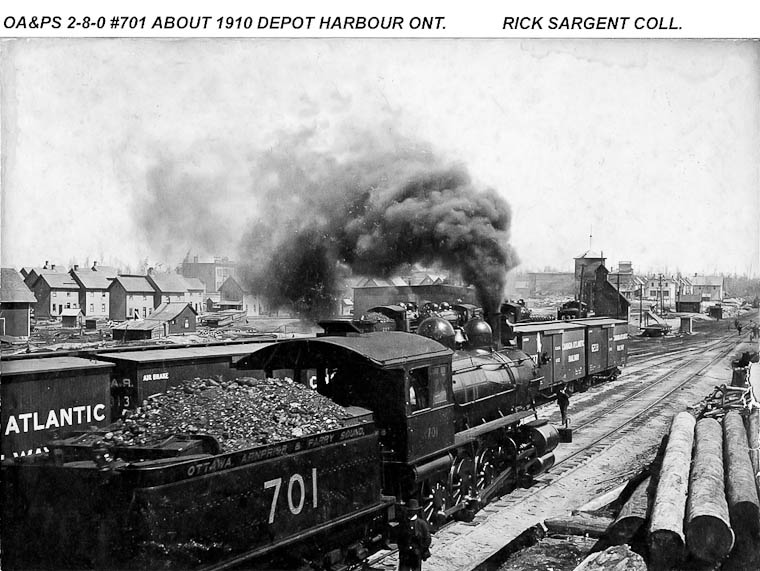
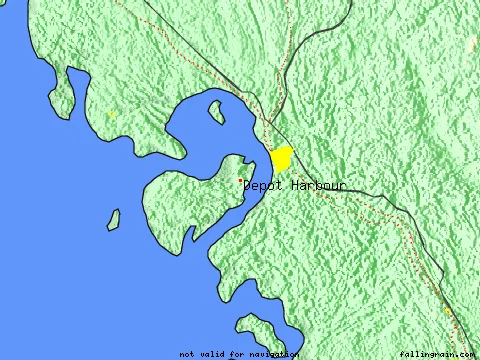
At the western end of J.R. Booth's Ottawa, Arnprior & Parry Sound Railway, Depot Harbour was built almost from scratch as an integrated transfer point between Great Lakes shipping and rail. At its height, the harbour, elevators, railway yard and town formed one of the most ambitious transportation projects on Georgian Bay.
Why build a new harbour?
Booth's railway was intended to create a direct east–west route from Georgian Bay through the Canadian Shield to Ottawa and connections farther east. A harbour terminal was essential: grain and other western freight could arrive by lake vessel, transfer to rail, and continue toward eastern markets without following a longer all-rail route around the upper Great Lakes.
Depot Harbour emerged in the mid-1890s as the western terminal. Construction of the rail connection and harbour facilities produced a purpose-built settlement where the railway company controlled much of the physical layout and economic life.
A port designed for transfer
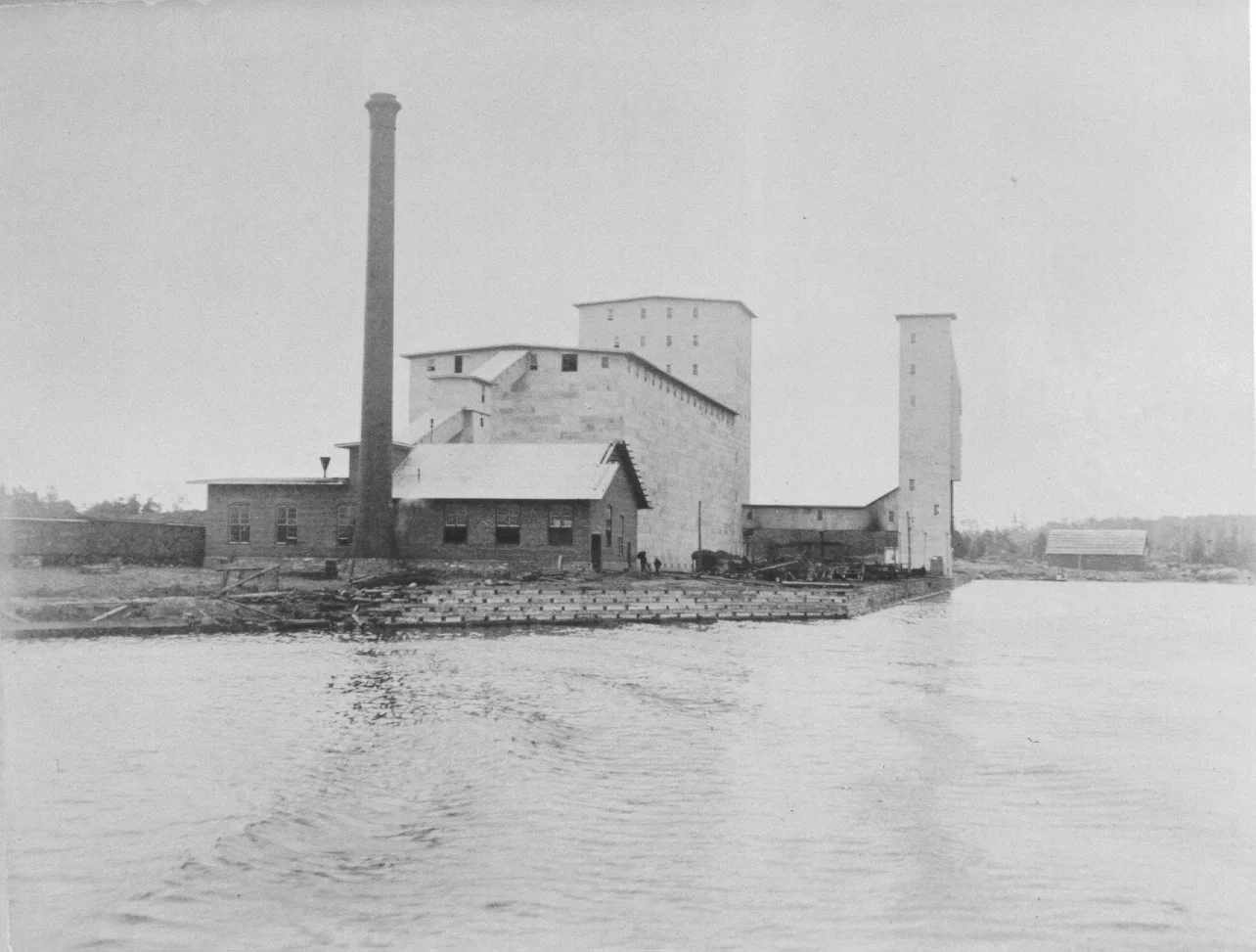
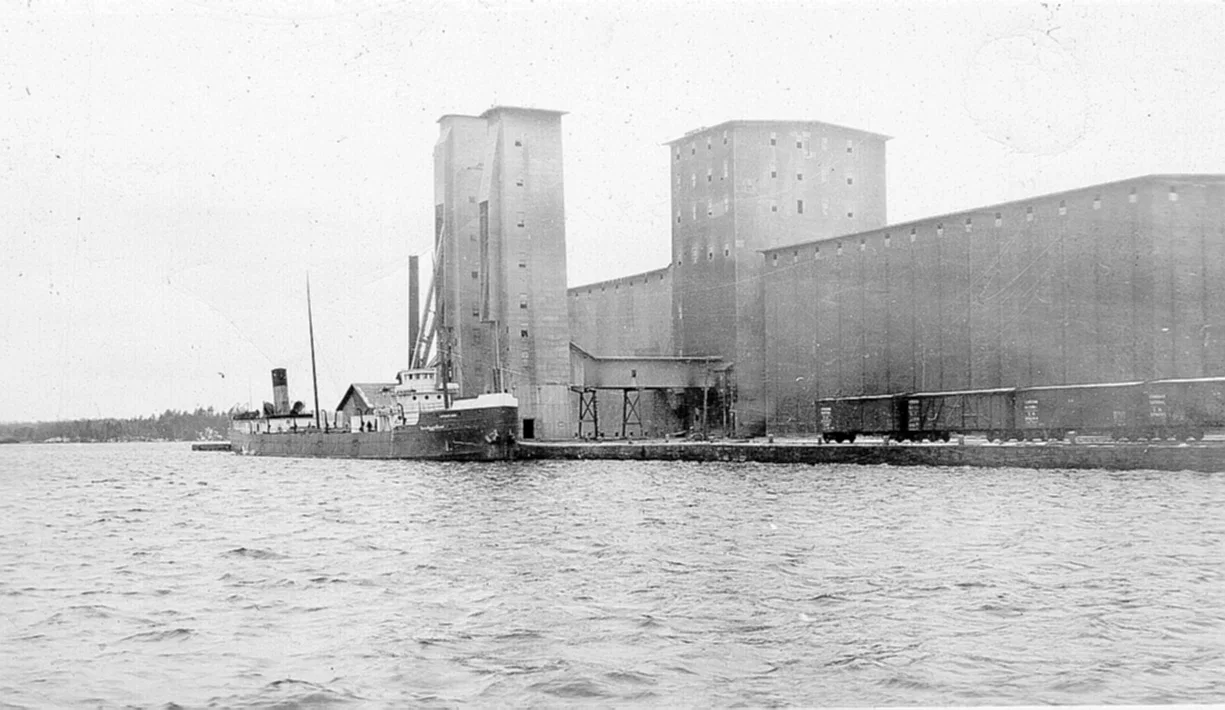
The waterfront was engineered around movement: ships alongside wharves, grain elevators and freight sheds immediately inland, and railway tracks threaded through the industrial area. The 1899 Goad fire-insurance plan records an elevator capacity of 1.2 million bushels and identifies electric lighting, steam heat, fire-pump equipment and a dense set of railway facilities. Depot Harbour was intended to handle volume quickly, not simply serve local traffic.
Explore the 1899 town plan
The fire-insurance plan is unusually detailed: it shows residential blocks, a school/hall, roundhouse, turntable, water tank, elevator, freight sheds and wharf infrastructure. Open the local interpretive plan →
A 1902 engineering plan survives
Library and Archives Canada’s CN land-records finding aid lists a May 1902 plan titled “Plan showing location of tracks, elevator, warehouses, docks, dwellings, offices etc. Depot Harbour, Ontario.” It is credited to chief engineer George Mountain and is one of the strongest surviving primary-source leads for reconstructing the terminal as a complete railway-and-port complex.
What the federal government reported in 1902
A Department of Marine and Fisheries report described Depot Harbour as a deep, sheltered natural harbour and recorded a grain-elevator capacity of about 1.25 million bushels, two warehouses each roughly 700 × 90 feet, and about 3,000 feet of dock frontage in approximately 22 feet of water. It also noted electric lighting generated from the elevator power house and heavy grain traffic through the port.
This contemporary government description is valuable because it independently confirms the scale shown in the engineering and fire-insurance records.
A company town, not just a dock
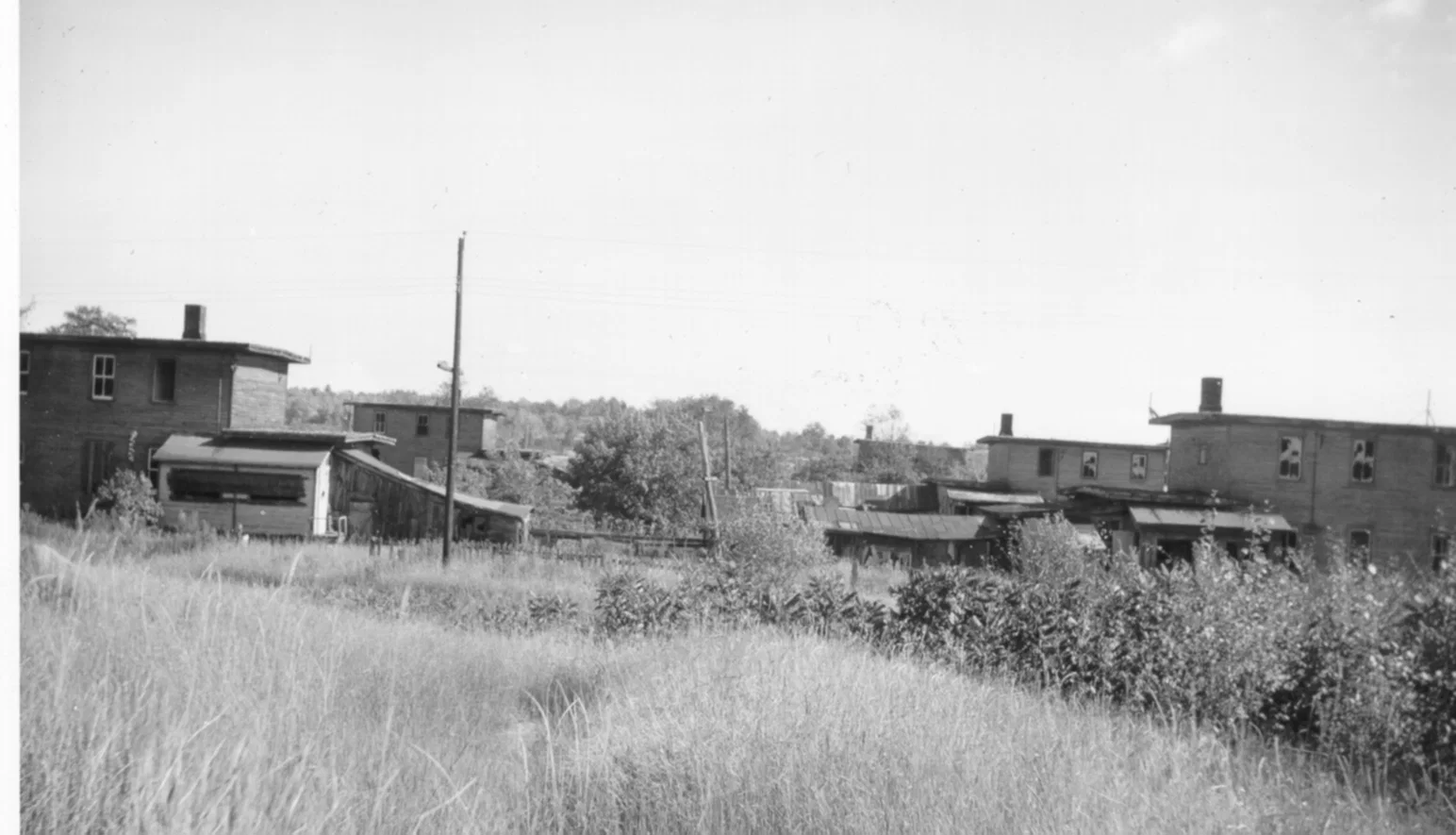
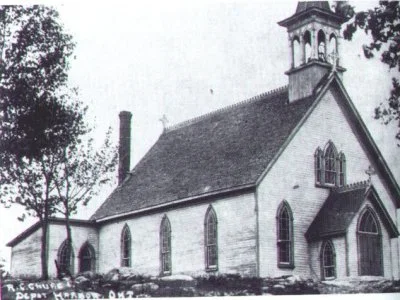
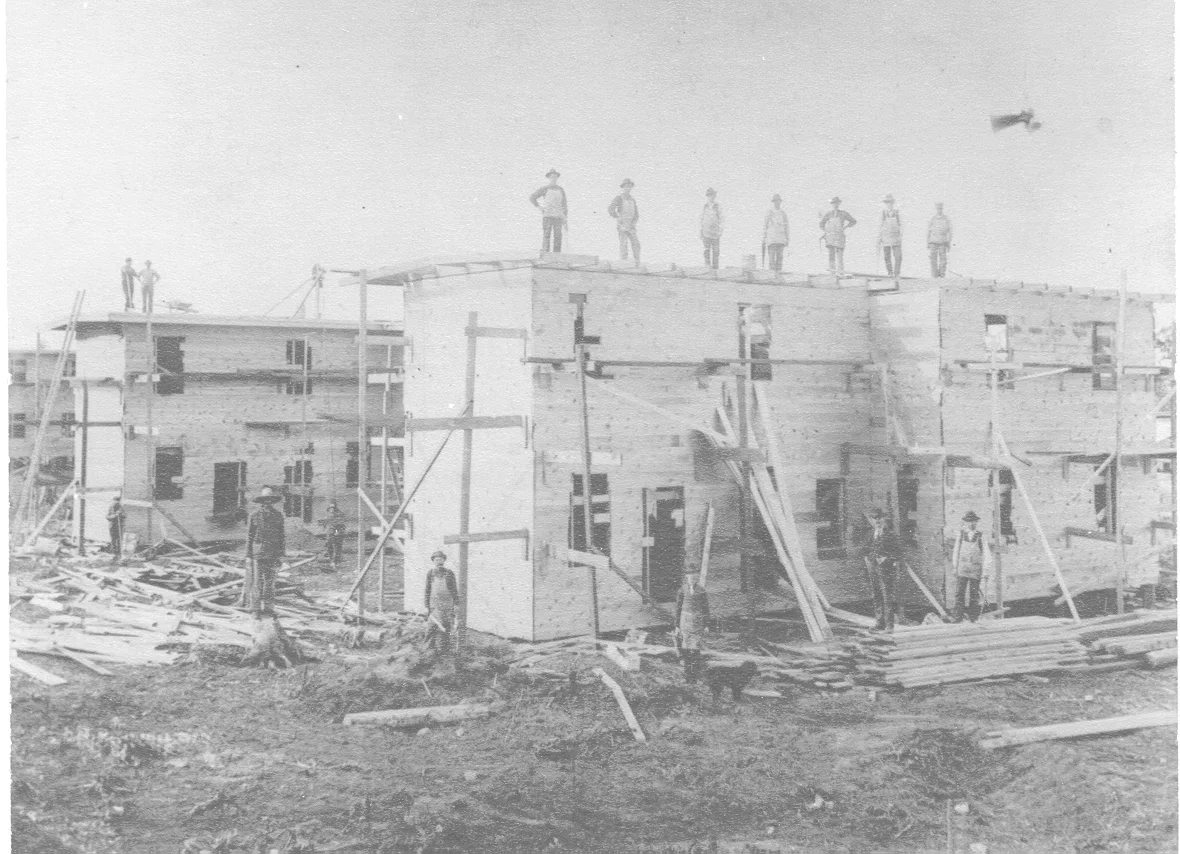
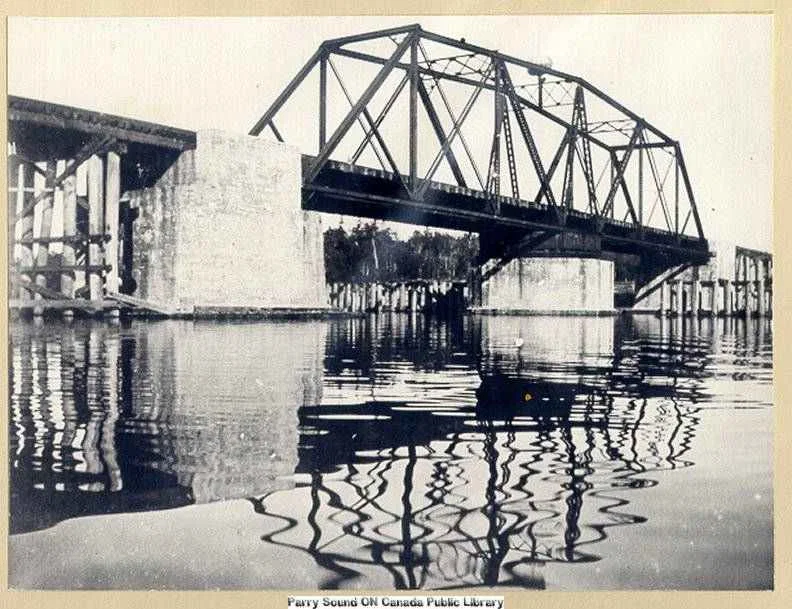
Housing, community buildings and businesses grew beside the industrial terminal. The townsite photographs preserved in the old website show substantial two-storey buildings, smaller houses and outbuildings — a much more developed community than the foundations visible today suggest.
The story also belongs to Wasauksing
Depot Harbour was developed on Parry Island, home of the Anishinaabe community now known as Wasauksing First Nation. Modern historical research stresses that the railway and port were not built on empty land: their development involved land loss, expropriation and major changes to the community's economic and physical landscape.
A Western University study of Depot Harbour describes the port's development as an intrusion into Indigenous property and life and identifies the resulting land loss as part of the harbour's long-term legacy. Library and Archives Canada also catalogues Department of Indian Affairs mapping of Parry Island that includes the former townsite and notes the later reclamation of Depot Harbour by Wasauksing First Nation.
A working terminal for steam locomotives
The 1899 plan places a roundhouse, turntable and water tank directly beside the railway approach. Those facilities mattered because steam locomotives required frequent servicing: water, fuel, inspection and mechanical work. Depot Harbour was therefore a locomotive terminal as well as a shipping port.
Why Depot Harbour declined
Depot Harbour's success depended on the transportation system around it. Ownership passed through the Canada Atlantic and Grand Trunk systems and eventually into Canadian National. Consolidation gave the railway new route choices, while changes in grain handling and shipping reduced the strategic advantage that had created the port in the first place.
By the 1930s the harbour was far quieter than during its peak years. Population and railway activity fell, and buildings that had been essential to a busy terminal became surplus.
August 14, 1945
The best-known event in Depot Harbour's later history is the enormous fire of August 1945. By that point the waterfront was being used partly for wartime storage associated with the explosives industry at nearby Nobel. Contemporary and later accounts describe a fire beginning around the old elevator/demolition area and spreading across the harbour facilities in high winds.
APTN's later reporting, based on community memories and newspaper records, emphasizes the scale of the event and the long-lived concern over explosives and contamination at the site. Importantly, the historical accounts are not completely uniform about the exact ignition sequence or whether cordite actually detonated; a provincial inquiry reportedly found that large quantities burned rather than producing the catastrophic explosion people feared. The safest way to present the history is therefore to distinguish the documented fire from later folklore about a single enormous blast.
Why this matters
The 1945 fire did not create Depot Harbour's decline, but it destroyed much of what remained of the old industrial waterfront and accelerated the disappearance of the community.
Coal, iron ore and the final industrial years
The harbour did not simply stop existing in 1945. Parts of the waterfront were reused after the fire. Historical accounts record a period of coal handling and later iron-ore pellet loading. By the late twentieth century, however, the transportation role that had created Depot Harbour was gone.
The result is unusual: a place that was once designed around constant movement — trains, ships, grain, freight and railway workers — survives primarily through foundations, harbour structures, old photographs, maps and community memory.
Depot Harbour chronology
1890s — western terminal created
The OA&PS reaches Georgian Bay and a new harbour/townsite is developed on Parry Island.
1899 — Goad plan
The fire-insurance plan records a population of about 300 and maps both the townsite and industrial waterfront in detail.
Early 1900s — busy transfer port
Rail and lake traffic expand; the elevators, wharves and railway terminal form the economic core of the settlement.
Grand Trunk / CNR era
Railway consolidation changes Depot Harbour's strategic role and gradually shifts activity elsewhere.
1930s–1940s — contraction
Traffic and population decline while some waterfront facilities are repurposed for wartime storage.
1945 — major fire
A huge waterfront fire destroys remaining industrial facilities and becomes the defining event in the town's final years.
Postwar — industrial reuse
The docks see coal and later iron-ore-related use even as the residential town disappears.
1987 and after
Historical accounts and archival mapping note the return/reclamation of former Depot Harbour lands by Wasauksing First Nation.
What survives in the archive
The long-term goal for this section is to bring together materials that are now scattered across many institutions. When reuse rights permit, the actual images and documents will live here locally; outside links will remain as source records and deeper reading.
How busy was the terminal?
Government records reported more than 12.3 million bushels handled at Depot Harbour in 1899 and more than 13.3 million in 1900. By 1903 parliamentary debate described a Canada Atlantic fleet of sixty locomotives and about a thousand box cars.
See the locally reconstructed traffic records and timetable →
1901 J.R. Booth Elevator insurance plan
Library and Archives Canada preserves a September 1901 Chas. E. Goad fire-insurance plan devoted specifically to the J.R. Booth Elevator at Depot Harbour. The record describes an isometric view, two building cross-sections, and notes on capacity, employees, utilities and construction. Copyright is recorded as expired.
Sources & deeper reading
- Patrick Holland-Stergar, Depot Harbour: the Rise and Fall of an Ontario Grain Port, Western University — scholarly study of the port's development, decline and Indigenous impacts.
- Library and Archives Canada, Plan of Parry Island — archival map record describing Wasauksing First Nation and the former Depot Harbour townsite.
- Charles E. Goad, Fire Insurance Plan of Depot Harbour, 1899 — public-domain two-sheet plan, Toronto Public Library / Wikimedia Commons.
- APTN Investigates, Depot Harbour: Exploitation, Contamination and Indigenous Resistance — community memories and later investigation of the 1945 fire and environmental legacy.
- McMaster University Libraries — catalogue holdings for 1899/1908 Depot Harbour fire-insurance plans and the 1901 J.R. Booth elevator plan.
External records are retained for verification and deeper research; the site itself is intended to contain the substantive history and locally hosted media.