Seguin Falls
Seguin Falls is where several strands of local history collide: the old Nipissing Road, lumbering, Booth's railway and the Seguin River. It is also the area of the tall concrete bridge piers documented on this site for decades as “Bridge Out.”
A village that moved toward the railway
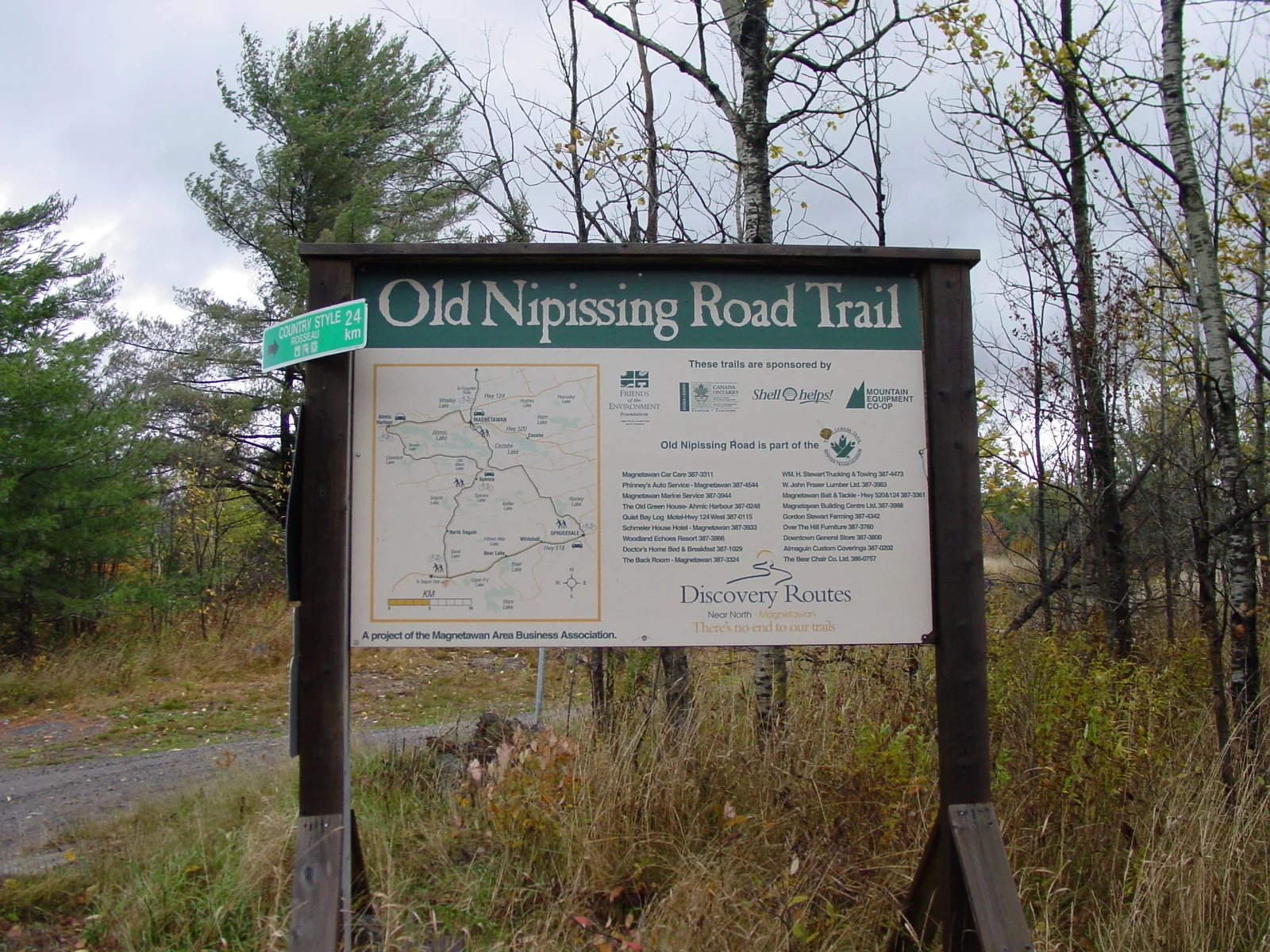
The first settlement grew along the Nipissing Road, which was open through this district in the 1870s. When the Ottawa, Arnprior & Parry Sound Railway arrived in the 1890s, commercial activity shifted closer to the tracks and station. Sawmilling, stores, a post office, school and the King George Hotel helped form the later railway-era village.
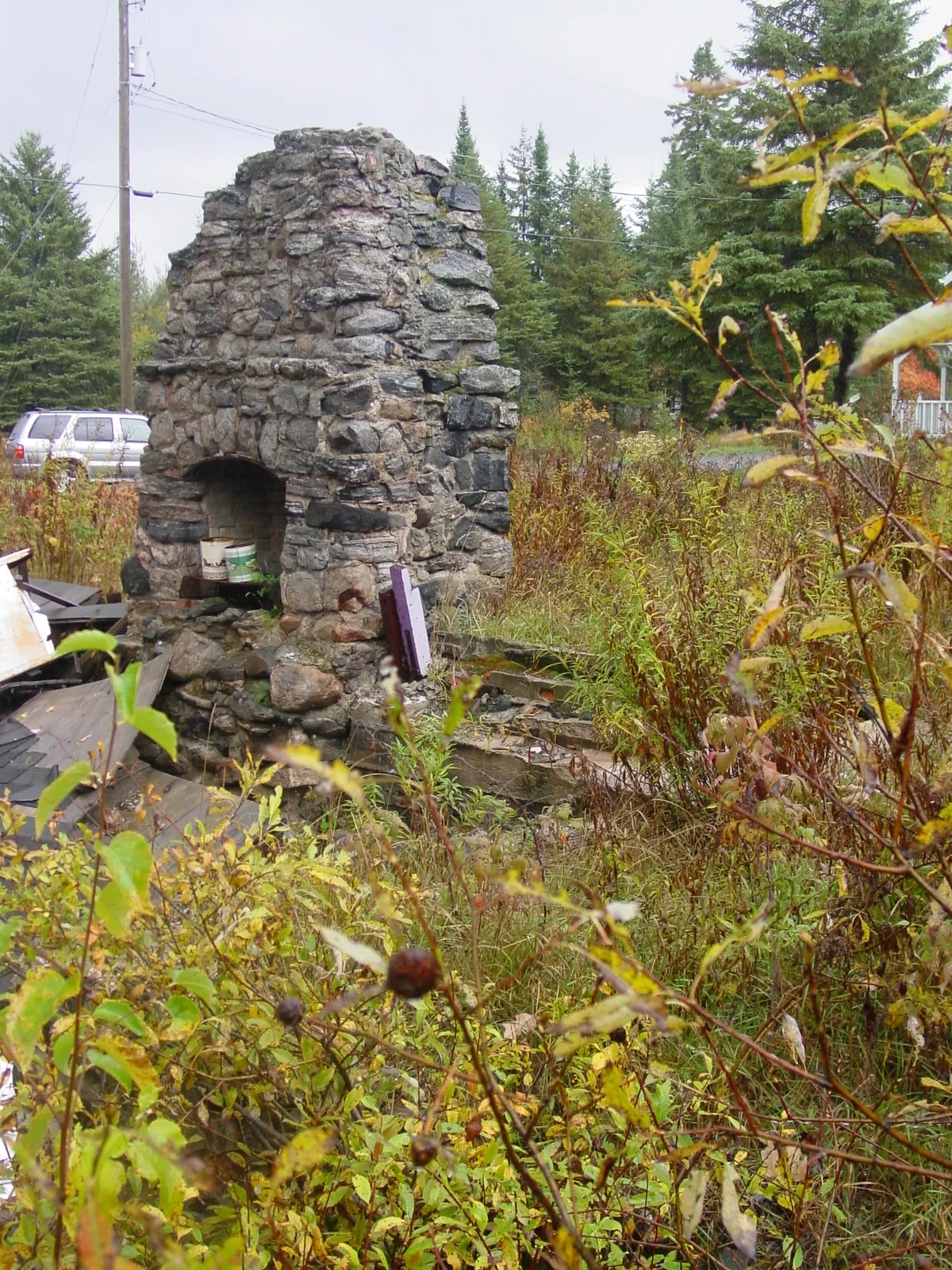
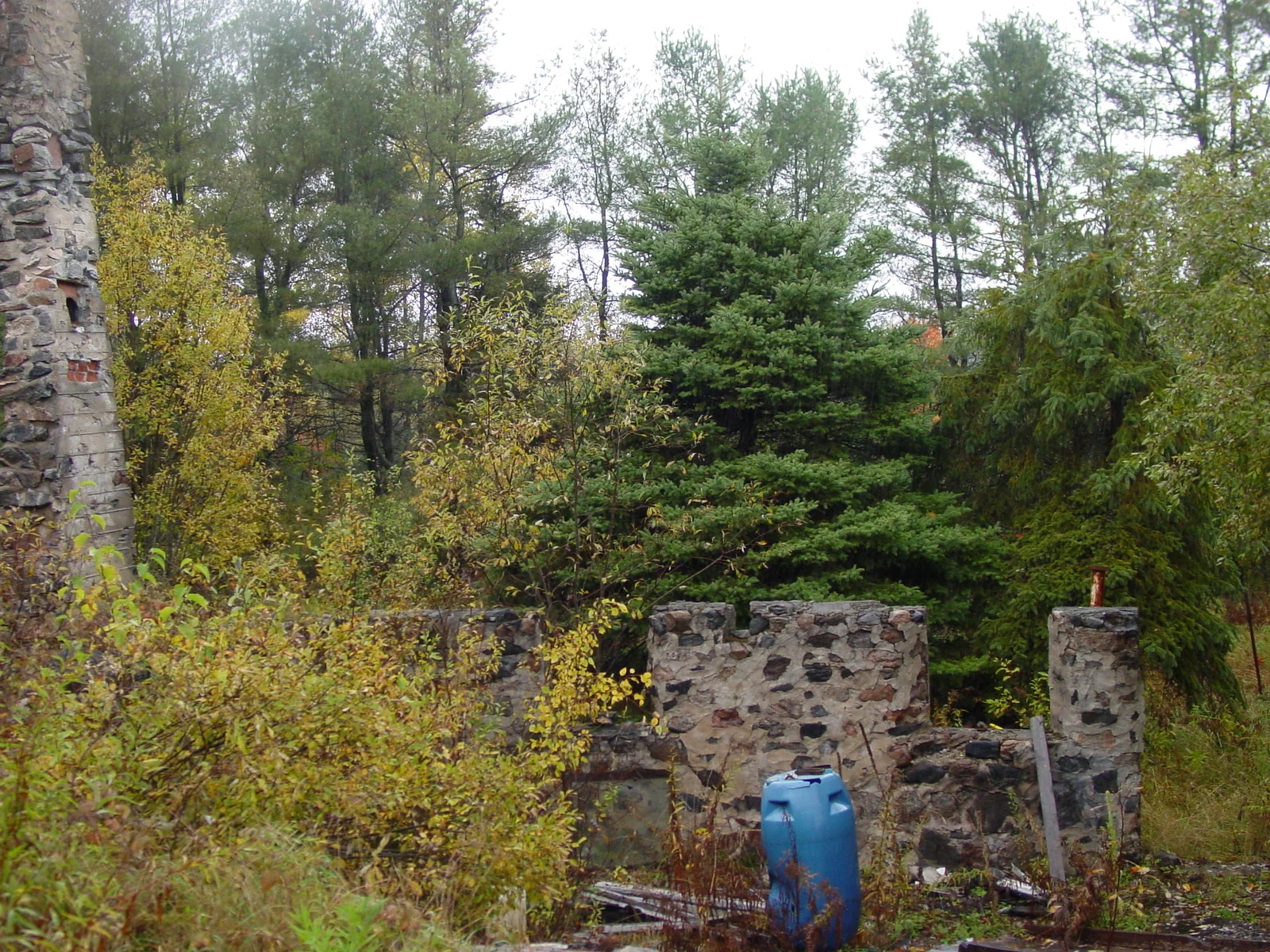
The King George Hotel
The King George stood close to the railway station and survived long after the railway era had begun to fade. The building later became a private residence and burned in 1989. The stone fireplace, chimney and foundations shown above were among the remains recorded in the site's original photo archive.
West of Seguin Falls, tall concrete piers mark the former railway crossing of the Seguin River—the location this site has long called “Bridge Out.”
See the Bridge Out pageThe older road is still visible
Sources and further reading
1909: residents ask for a proper station
In 1909 residents of Seguin Falls and vicinity petitioned the federal Board of Railway Commissioners for an order requiring the Grand Trunk Railway to provide a proper station building and platforms. The Board did not order a completely new building, but Order No. 8142, dated September 14, 1909, required the railway to clean and maintain the existing station, provide proper seats and lamps, and construct a platform and other specified improvements.